
Have you ever pulled out your favorite sweater and thought that it had lost its beauty? These little balls that appear as if by magic sometimes give the impression that the garment has aged too quickly. However, this phenomenon affects almost all wardrobes, even the most neat. Good news: understanding what’s behind these pills is already taking a big step towards wool sweaters that are always elegant and cozy, season after season.
Why do wool sweaters pill so easily?
Before we pull out the miracle solution, let’s take a moment to understand. Pilling is neither a manufacturing defect nor a sign of negligence; it is simply the natural reaction of the fibres. Wool, like cashmere, is made up of fine, soft fibers that tend to shift. By dint of friction — against a coat, a handbag or even a chair — certain fibers rise to the surface and intertwine, forming these famous little balls.
Another point that is often misunderstood: the thinner and more pleasant a fiber is to the touch, the more it can pill. Yes, paradoxically, a soft and beautiful quality sweater can pill more than a stiffer model. Washing also plays a key role: water, the movements of the drum and contact with other clothes accentuate these microscopic frictions, invisible to the naked eye… until they manifest themselves.
Pilling: an enemy of style, not of quality

Seeing pilling appear can be discouraging, especially when you like to take care of your belongings. However, it is essential to de-dramatize: this phenomenon does not alter the warmth or comfort of the sweater. It mainly affects areas subject to repeated friction – under the arms, on the sides or on the sleeves.
Rather than putting this sweater away at the back of the closet, it’s better to act gently. An inappropriate gesture could weaken the knitwear, while a few simple techniques are enough to make it look good again, such as after a visit to the dry cleaners.
Simple tips to remove pilling without damaging the wool
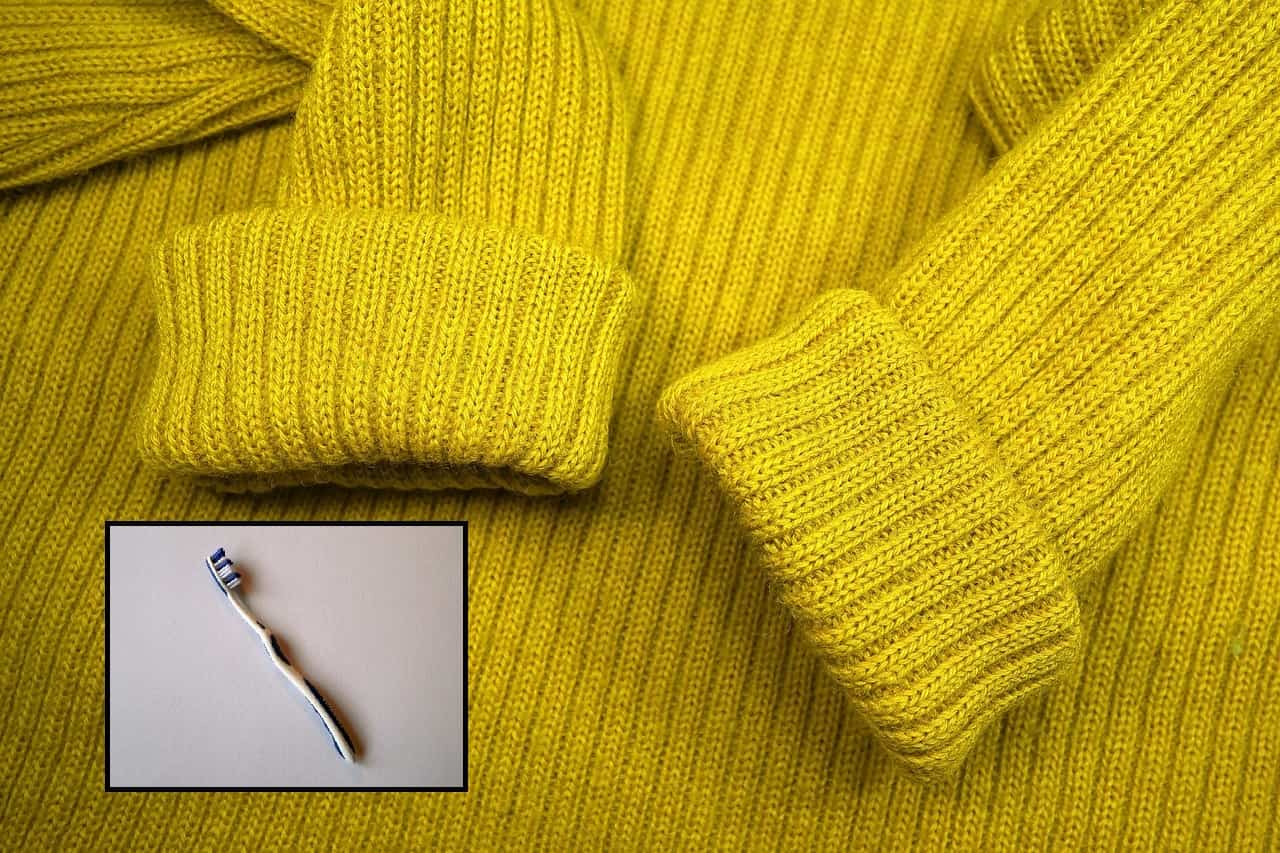
The good news is that you don’t need to invest in complicated hardware. Many everyday objects can work wonders, as long as they are used gently. The idea is always the same: remove pilling without pulling on the fibers.
A slightly abrasive kitchen sponge can become your ally; Gently wipe it over the fabric, flat, without pressing. Pumice, often associated with foot care, is also very effective: it catches pilling without damaging the mesh. For smaller or delicate areas, an old, clean and dry toothbrush allows precise work with small circular movements.
Surprising but dreadful trick: worn tights. By putting them on like a glove, you can smooth the surface of the sweater and hang the lint smoothly. A simple, almost playful gesture that gives stunning results.
The right reflexes to avoid their return

A young woman holds knitted warm sweaters in her hands. Autumn and winter clothes. Decluttering. Donations. Close-up. Selective focus.
Once the sweater has cleared of pilling, a few habits can slow down its reappearance. Wash your sweaters inside out, cold or low, with a gentle cycle. Avoid mixing them with rough pieces such as jeans and prefer to dry flat, away from heat sources.
In terms of storage, fold them rather than hanging them: this limits tension on the knit and helps the garment to retain its shape. These simple gestures, repeated over time, make all the difference and extend the beauty of your favorite pieces.
Taking care of your wool sweaters ultimately means adopting a few easy rituals that transform winter into a season of chic and sustainable comfort.


0 comments:
Post a Comment